Car Match - Traffic Puzzle
- 4.6
- Rating
- 1.00M
- Installs
- Free
- Price

 Analysis by App-foxy
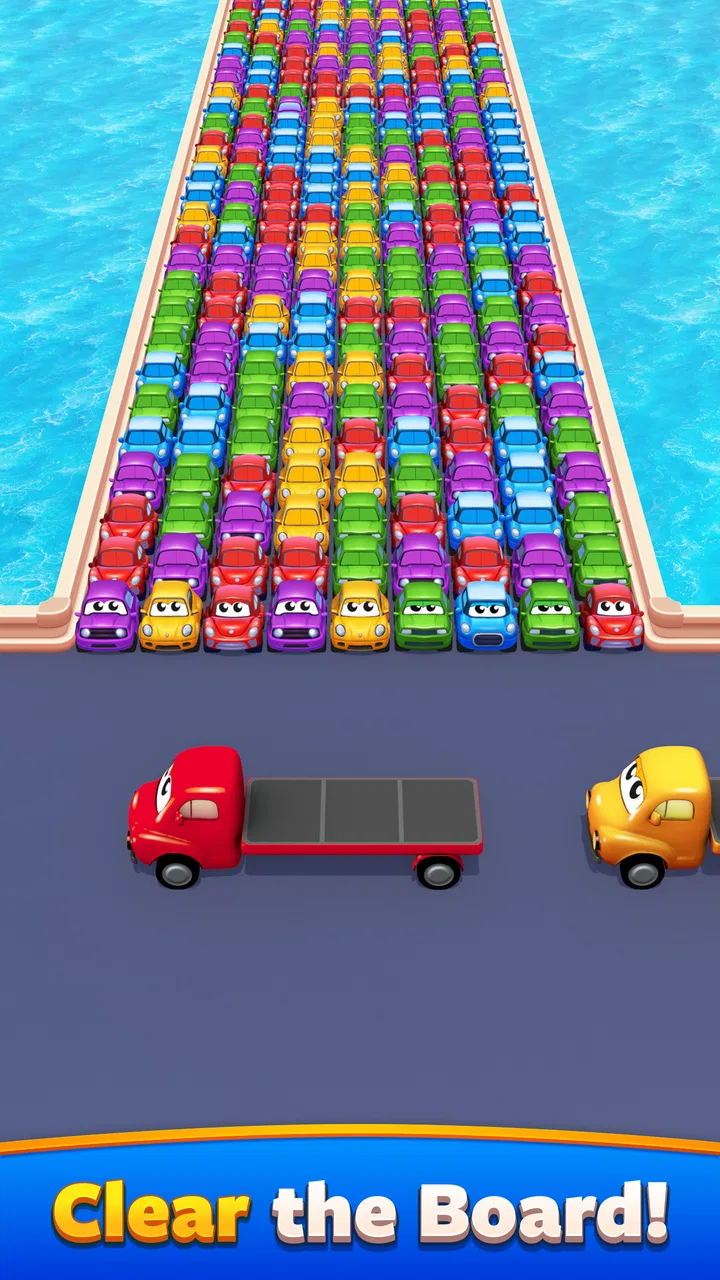
Car Match - Traffic Puzzle is the kind of match-3 puzzle game I can open for a short break without needing to learn a complicated rulebook first. Its central idea is easy to understand: match cars while dealing with traffic-themed puzzle situations. That familiar foundation makes the game approachable, but the traffic setting gives the usual tile-matching routine a more focused identity than a plain collection of colored gems or candies.
I spent time with it as a casual player rather than treating it like a competitive challenge game. My first impression was that it aims for quick decisions, visible progress, and a steady stream of small goals. That combination works well when I want something light on my phone, especially during a commute, while waiting for an appointment, or when I only have enough attention for a few minutes. It is free to download, rated for Everyone, and developed by Grand Games A.Ş., so it is clearly positioned as an accessible game for a broad audience.
At the same time, the simple presentation should not be mistaken for unlimited depth. The main appeal depends on whether you enjoy repeating match-3 decisions and gradually handling more demanding boards. If you want a story-heavy puzzle adventure, a completely original rule set, or a game that rewards long strategic planning above all else, this may feel too familiar. For players who like tidy objectives and traffic-themed visual feedback, however, it has a pleasant starting point.
You May Also Like

 Blood Strike: 2.5 Anniversary
Blood Strike’s Loadouts Turn Every Drop Into a Tactical Gamble
A close look at Blood Strike’s custom loadouts: how fast access to signature weapons reshapes its battle royale rhythm, rewards preparation, and narrows the gap between fights.

 Pandora - Music & Podcasts
Pandora’s Music Is Easy to Start, but Harder to Recover
Pandora’s strength is its low-effort path from a seed to a station. Its weak spot is how much confidence it asks you to place in connection, setup, and quiet recovery.

 8 Ball Pool
 Is Built on Rivalries, Rematches, and Routine
A close look at the rivalries, rematches, shared routines, and unanswered safety questions that turn a quick pool match into a persistent mobile community.

 Samsung Music
’s Quiet Strength Is Playing What You Already Own
Its reach comes less from spectacle than from dependable access to a personal library. That simplicity is both the app’s strongest retention engine and its ceiling.

 AccuWeather: Weather Radar
AccuWeather Review: A Quick, Clear Forecast for Everyday Decisions
For everyday plans, the best forecast is the one you can understand quickly. AccuWeather makes rain timing, radar, and local conditions easy to act on, with a few trade-offs.

 Hill Climb Racing
Why Hill Climb Racing Still Turns Crashes Into One More Run
A tiny car, a bumpy hill and one more upgrade: Hill Climb Racing keeps resurfacing because its simple chaos makes every near-miss feel personal.
More From Our News Desk
View All News


How the first goals establish the rhythm
The opening experience benefits from not asking me to master several systems at once. I can concentrate on the basic action: look at the board, identify useful matches, and think about how a move affects the traffic situation. That clarity matters in a mobile puzzle game. I do not want to spend the first session searching through menus or reading long explanations before I can understand whether the core play is enjoyable.
The early goals also serve as a practical tutorial. Instead of treating the first stages as a test of expert skill, the game gives me room to recognize patterns and understand the cost of careless moves. I found that useful because match-3 games often look effortless until the board begins to restrict the obvious choices. The traffic theme gives those choices a little more context: I am not simply clearing pieces for decoration, but trying to make progress through a situation that suggests movement and organization.
A good early-session habit is to pause briefly before making the first match. The most visible move is not always the most useful one. I look for matches that open space or create a better follow-up rather than immediately removing whatever group catches my eye. This small change in approach makes the game feel more thoughtful without turning it into a slow, analytical experience.
The game is especially suitable for someone who has not played many puzzle titles recently. The basic match-3 language is familiar enough to be welcoming, while the car-focused setting gives the experience a clear visual theme. I could hand the phone to a casual player and explain the basic idea quickly. That accessibility is one of its strongest qualities, particularly for families or anyone who wants a low-pressure game that can be understood in a few minutes.
What makes the traffic theme useful
The traffic concept is more than a cosmetic change because it influences how I read the board. Cars, routes, and movement suggest that clearing one area may help another area become manageable. Even when the underlying activity remains a match-3 puzzle, the theme encourages me to think in terms of flow rather than isolated matches. I pay attention to where a move creates room and where it might leave a blocked-looking section behind.
That framing also helps the game avoid feeling completely interchangeable with every other match-3 title. It does not transform the genre into something unrecognizable, but it gives the familiar loop a specific personality. I prefer that kind of modest identity to a game that adds a busy story or a large collection of unrelated mechanics simply to appear different.
Progress signals and the value of visible momentum
One reason I kept returning to Car Match - Traffic Puzzle is that its progress is easy to read. Each successful board gives me a sense that I have moved forward, even when the individual puzzle is short. This matters in a casual game because the reward is often not a dramatic narrative event. Instead, it is the satisfaction of finishing a goal, seeing the next challenge, and feeling that my decisions are becoming more deliberate.
The game’s current version is 0.0.472, and it has already reached over a million installs with an average rating of 4.5 from around twenty-five thousand ratings. Those figures suggest that the basic format has found a sizeable audience, but they do not replace personal testing. In my experience, the important question is not simply how many people have tried it; it is whether the progression gives me a reason to return after the novelty of the cars wears off.
For me, progress works best when I treat each session as a small objective rather than expecting a major unlock every time I play. I might aim to finish one difficult board, improve the way I use the available space, or simply reach a point where the next stage feels manageable. This mindset makes the game more enjoyable because it matches the scale of the experience. It is built around repeated short victories, not a single enormous payoff.
That also answers an important practical question: is it possible to enjoy the game without playing for long stretches? Yes. Its puzzle structure suits brief sessions, and I do not need to reserve a full evening to get something from it. A few completed goals can be enough. Players who prefer long uninterrupted campaigns may find that the bite-sized rhythm feels less substantial, but that is precisely what makes it convenient for casual use.
How I read progress without rushing
I recommend judging progress by decision quality, not only by whether a board is cleared immediately. When I make a match that creates space for a later move, I consider that a successful step even if the result is not spectacular. This is particularly useful once the stages stop offering obvious combinations. The game becomes less about tapping quickly and more about recognizing which part of the board deserves attention first.
Another useful approach is to avoid spending every helpful resource or advantage at the first sign of trouble. In a match-3 game, an easy move can sometimes remove the very arrangement that would have produced a stronger solution. I try to preserve flexibility until I understand the board. That habit does not require hidden knowledge or complicated planning, but it gives the puzzle loop more depth than simply clearing the largest visible match.
Difficulty, challenge, and the point where pacing matters
The difficulty curve is the area I watched most closely. A puzzle game needs to become more demanding without making the player feel punished for learning. Car Match - Traffic Puzzle starts from a friendly place, then relies on increasingly careful choices to maintain interest. The challenge comes from having fewer obviously perfect moves and needing to consider what the board will look like after a match.
That change in difficulty is important for retention. If every stage can be solved by making the first available match, the traffic theme quickly becomes decoration. When the board asks me to plan one move ahead, the game earns more of my attention. I start checking whether a match will open a route, leave awkward pieces behind, or reduce the number of useful options on the next turn.
The trade-off is that players who dislike trial and error may become frustrated when a promising move does not lead to a clean solution. Match-3 games naturally include moments where the board arrangement influences the outcome, and that can make difficulty feel less predictable than in a pure logic puzzle. I would choose a more strictly deterministic puzzle game if I wanted every challenge to be solved through careful deduction alone.
My advice is to slow down when a stage appears difficult rather than responding with faster taps. Look across the whole board, identify the most restricted area, and consider whether a match elsewhere will improve access to it. This is one of the more useful lessons the game provides: the best move is often the one that improves the next few possibilities, not the one that produces the biggest immediate visual effect.
Who will enjoy the challenge
The challenge suits players who like gradual pressure. It is not the right pick for someone seeking a relaxing game with no chance of failure, because the appeal depends partly on overcoming boards that demand better timing and arrangement awareness. On the other hand, it should feel more approachable than a specialist puzzle game that expects advanced planning from the opening screen.
I also think it works well for players who enjoy sharing a device with family members. The rules are easy to explain, but different people can approach the same board differently. One person may prioritize clearing space, while another may look for a larger match or a safer sequence. That makes it suitable for occasional informal play, although anyone looking for a dedicated multiplayer competition should look elsewhere because the core attraction is the individual puzzle loop.
Retention pressure and the free-to-play balance
Car Match - Traffic Puzzle is free to play, which removes the biggest barrier to trying it. The game includes in-app purchases ranging from $0.99 to $199.99 per item, so players should be aware that optional spending can become part of the experience. I would approach those purchases carefully and decide in advance whether I am comfortable paying to make progress feel easier or faster.
This is where the game’s pacing matters most. A free puzzle game can remain enjoyable when the player feels that improvement comes from better choices. It becomes less satisfying when every difficult moment seems designed to push the player toward spending. I prefer to treat the free version as a test of patience and skill: if I can still enjoy working through a difficult board without paying, the game has lasting value for me.
Parents should also consider how the purchase range fits the person using the device. The content rating is Everyone, which makes the game broadly accessible from an age perspective, but an age rating does not remove the need for sensible purchase controls. I would use device-level purchase protections on a shared phone or tablet, especially if younger players may be experimenting with the game.
The retention design is strongest when the next puzzle feels like a reasonable invitation rather than an obligation. I like being able to stop after a short session without feeling that I have missed an essential event. If you are the type of player who enjoys daily routines, repeated goals, and gradual improvement, the structure should be comfortable. If you dislike games that encourage regular returns or offer purchases around progression, a paid puzzle game with a fixed structure may be a better match.
When another puzzle type is a better choice
Compared with traditional match-3 games built around fantasy worlds, character stories, or decorative home-building, this game puts more emphasis on the traffic puzzle itself. That is an advantage if you want a focused theme and a cleaner reason to play. It is a disadvantage if you expect a large narrative layer between stages or a broader collection of side activities.
Compared with pure logic games such as number puzzles or grid-based deduction titles, Car Match - Traffic Puzzle is more immediate and visually active. I can make progress through pattern recognition rather than writing down possibilities. The cost is that the experience may feel less exact, especially for players who want a puzzle with one clearly provable answer and no dependence on board presentation.
Compared with a premium puzzle game, the free entry is convenient, but the purchase structure requires more self-control. I would recommend this title to someone who wants to sample the format before committing money. I would recommend a premium alternative to someone who knows they dislike in-app purchase prompts and would rather pay once for a contained experience.
My progression verdict after looking beyond the first session
Car Match - Traffic Puzzle sustains play through a sensible sequence: understand the basic match, recognize the traffic-themed objective, improve board awareness, and then face stages where careless choices become more expensive. That is enough to create a useful progression arc without pretending the game is something it is not. Its strength is repetition with a clear visual identity, not a huge collection of systems.
The most important hidden lesson is that the game rewards preserving options. I do better when I resist automatic matches, inspect the restricted areas first, and use early moves to create room for later decisions. That approach makes the stages feel less like random tapping and more like small traffic-management problems. It is a concrete reason to keep playing beyond the initial novelty.
I also appreciate the flexibility of the session length. I can use it as a quick distraction while waiting for coffee, play a few boards during a commute, or spend longer trying to overcome a stubborn puzzle. The same structure supports all three situations. The limitation is that players seeking a deep campaign, a strong story, or a completely new puzzle mechanic may eventually find the loop repetitive.
Overall, I would recommend it to casual Android players who enjoy match-3 games, want a traffic-focused theme, and are comfortable setting their own limits around optional purchases. The minimum requirement of Android 8.0 keeps it within reach of many older devices, and the Everyone rating makes the presentation broadly approachable. I would skip it if I wanted a premium, interruption-free logic experience or a game centered on narrative progression.
My final view is positive but measured: this is a good choice for short, repeatable puzzle sessions, especially when I want a familiar format with a car-and-traffic identity. Its early goals are easy to grasp, its challenge can become meaningful when I plan instead of tapping automatically, and its pacing gives me reasons to return without demanding a long sitting. The best way to enjoy it is to treat each board as a small planning exercise, not a race to clear the first match you see.
FAQs for Car Match - Traffic Puzzle
01What is Car Match - Traffic Puzzle?
Car Match - Traffic Puzzle is a strategic puzzle game where players must match and arrange cars to clear traffic jams. The game combines elements of logic and planning, offering various levels of increasing difficulty. It’s designed to be engaging for both casual gamers and those who enjoy more challenging puzzles.
02Is Car Match - Traffic Puzzle free to play?
Yes, Car Match - Traffic Puzzle is free to download and play. However, it does offer in-app purchases for players who wish to enhance their gameplay experience. These may include additional levels, special hints, or the removal of ads for uninterrupted play.
03What platforms is Car Match - Traffic Puzzle available on?
Car Match - Traffic Puzzle is available on both Android and iOS platforms. Users can download it from the Google Play Store for Android devices and the Apple App Store for iOS devices. Ensure your device meets the minimum requirements for a smooth gaming experience.
04What are the main features of Car Match - Traffic Puzzle?
The game features a variety of challenging levels, intuitive touch controls, and vibrant graphics. Players will enjoy daily challenges, leaderboards, and special events that keep the gameplay fresh and engaging. It also includes a hint system to assist players when they’re stuck on particularly difficult puzzles.
05Does Car Match - Traffic Puzzle require an internet connection?
Car Match - Traffic Puzzle can be played offline, making it a great option for on-the-go gaming. However, an internet connection may be required for certain features, such as accessing leaderboards, downloading updates, or participating in special events.
Pros
- Engaging puzzle mechanics
- Colorful and vibrant graphics
- Challenging levels keep interest
- Smooth and responsive controls
- Frequent updates with new content
Cons
- Ads can be intrusive
- Limited free-to-play options
- Requires constant internet
- Battery consumption is high
- Some levels feel repetitive

Car Match - Traffic Puzzle
Gallery